- Doukhobor Beliefs
- Doukhobor Culture
- Historical Information
- Doukhobor Organizations
- Frequent Questions - FAQs
- In Memoriam
- Resources Web Page
Visit our Home page for latest Doukhobor News and Quick Links
to our Calendar, Video page, Search box and more >>
ABOUT THE DOUKHOBORS
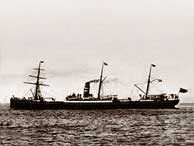
The Doukhobor movement emerged in the 18th century as a Russian Christian peasant reaction to the excessive opulence, elaborate rituals and authoritative practices of the Orthodox Church. Doukhobors practised a simpler form of religion, rejecting the literal Bible and the need for an intermediary priesthood, looking inward within themselves for the Voice of God. Perceiving them as a threat to their authority and concened about the potential for more widespread insurrection, the Russian Orthodox Church and Czarist authorities persecuted the Doukhobors for over two hundred years, particularly at the end of the 19th century when they adopted pacifism and renounced militarism. Assisted by renowned author Leo Tolstoy and Quaker sympathizers, the Doukhobors found refuge from persecution in Canada where they were granted conscientious objector status and were exempted from military service.
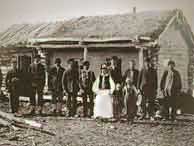
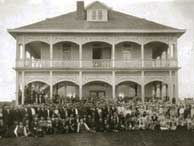
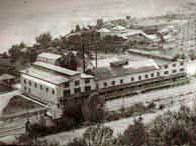
Some 7500 Doukhobors, nearly a third of the total existing population, settled on the Canadian prairies in the early 1900s, establishing dozens of communal village settlements on government granted homesteads in what is now the province of Saskatchewan. Confronted with an apparent breach of agreement by the Canadian government in terms of homestead requirements and allegiance to the crown, a great proportion of these Doukhobors chose on principle, to abandon their villages and nearly a quarter million acres of their cultivated land. Almost 6000 emigrated to British Columbia in 1908 to settle on large parcels of privately purchased land. Nearly 80 communal villages were constructed throughout the Kootenay-Boundary region of B.C. with elaborate supportive agro-industrial complexes in Grand Forks and Brilliant, under the corporate ownership of the CCUB (Christian Community of Universal Brotherhood). By 1924, this Doukhobor community had become the largest communal organization of its kind in North America. The USCC is a descendent of that organization and although its members no longer live communally, it remains until this day, the largest Doukhobor organization in Canada. Aside from the USCC, smaller Doukhobor organizations and groups also exist throughout the three western provinces.
Doukhobors today, as individuals or organizations, continue to be active pacifists and aspire to preserve their traditional values, Russian heritage, language and customs. They are also proud Canadian citizens and participants in the economic, social and cultural landscape of this country.
Doukhobor Discovery Centre - a reconstructed Doukhobor village in Castlegar, BC